
How to Search Snohomish County Court Records
The court level decides which tool to use. Superior Court cases live in the Odyssey Portal. District and municipal cases live in the statewide Washington Courts search. Both are free to search for basic case information. You do not need to register just to look up a case. You do need elevated or paid access to open the actual document images.
For Superior Court, start with the Odyssey Portal Smart Search. It holds felony, major civil, family law, probate, and juvenile case data. The portal is literal. It searches exactly what you type. If a common name returns too much, use the wildcard trick, such as last name, first initial, and an asterisk like "Smith, J*".
For traffic, misdemeanors, small claims, and city cases, use the Washington Courts case search. It pulls cases from municipal, district, superior, and appellate courts statewide. Data updates within a 24-hour window. The results point you to the record but are not always the complete court record, so verify with the court of record when it matters.
- Decide first whether you only need case information or you need the actual documents.
- For free case-information searching, open the Odyssey Portal Smart Search.
- Enter the case number if you have it. If searching by person, type the name in Last, First Middle Suffix format.
- If the search is broad or the name is common, expand Advanced Filtering Options and add location, search type, case type, case status, file-date range, or judicial officer filters.
- For a business, expand Advanced Filtering Options, open General Options, select Business Name, type the name, and submit.
- If nothing comes up, try the wildcard method, such as last name, first initial, asterisk.
- Open a matching result to read the case summary. Viewing documents is gated for public users.
- For copies, use the Washington State Digital Archives for one-time purchases or the clerk for mail or in-person requests.
- For frequent access, ask the clerk about an Odyssey subscription agreement and the annual fee.
- For sealed or confidential records, appear in person with a government photo ID and legal authority or a court order.
Note: document images usually appear in the portal about 15 minutes after eFiling acceptance and in the Digital Archives within two business days.
Snohomish County Court Records Search Fields
The Odyssey Portal Smart Search uses one main search box plus an advanced panel. Most people just type a name or a case number and go. The advanced filters help when a name is common or when you want to limit results to a single court, case type, or date range. The table below lists the fields the portal exposes and how each one behaves.
| Field Label | Type | Required | Notes |
|---|---|---|---|
| Record Number or Name (Last, First Middle Suffix) | text | One of record/name fields | Main search box. "Record #" means case number per the clerk FAQ. |
| Last Name | text | Conditional | Person search. Odyssey is literal; wildcard * is advised for hard names. |
| First Name | text | Optional | Use with last name. Business search needs advanced options. |
| Middle Name | text | Optional | Can narrow a person search. |
| Name Suffix | dropdown | Optional | Portal asks for a valid suffix; full options not exposed. |
| Advanced Filtering Options | panel | Optional | Expands General, Party Search, and Case Search criteria. |
| Filter by Location | dropdown | Optional | Court or county location filter. |
| Filter by Search Type | dropdown | Optional | Pick Business Name for business searches. |
| Include: Cases | checkbox | Optional | Case inclusion filter. |
| Search by | radio | Optional | Party Name, Nickname, Business Name, or Sounds Like. |
| Filter by Phone / FBI / SO / Booking Number | text | Optional | Advanced party criteria. |
| Filter by Case Type | dropdown | Optional | Use for a specific case type. Full options not exposed. |
| Filter by Case Status | dropdown | Optional | Options not exposed in the public scrape. |
| Filter by File Date Start / End | date | Optional | Sets a date range for results. |
| Filter by Judicial Officer | dropdown | Optional | Limits to a judge or commissioner. |
JavaScript and cookies must be on for the portal to work. It supports current and prior major releases of common browsers.
Types of Snohomish County Court Records
Court records split by case type and by court level. Superior Court keeps the heavier matters. District Court keeps the lower-level and high-volume ones. Municipal courts handle city code and city traffic. Here is what falls into each main bucket.
- Civil: complaints, summonses, answers, motions, declarations, exhibits, orders, judgments, writs, garnishments, and satisfactions. Filed in Superior Court for larger matters and District Court for smaller ones.
- Criminal: Superior Court felony files hold the information, probable cause statement, arraignment minutes, plea documents, and the judgment and sentence. District Court handles misdemeanor and gross misdemeanor traffic and non-traffic cases.
- Family law and divorce: divorce, legal separation, parenting plans, child support, parentage, petitions, financial declarations, and final decrees. Heard in Superior Court.
- Probate: estate petitions, wills, letters testamentary, inventories, notices to creditors, guardianship and conservatorship papers, and closing orders.
- Traffic and infractions: notice of infraction, citation number, hearing requests, fines, deferrals, and collections status. District Court handles county traffic; cities handle their own.
- Small claims: the claim form, proof of service, answer, hearing notice, judgment, and satisfaction. District Court, $50 to file.
- Juvenile: handled through Superior and Juvenile Court with access limited by RCW 13.50 and court rules. These are not open like adult files.
Recorded documents and marriage licenses are kept by the Auditor, not the courts, so they are searched separately.
What Snohomish County Court Records Show
A public case summary in the portal gives you the core facts of a case without the full paperwork. You see who the parties are, what the case is, where it sits, and what has happened on the docket. To read the actual filings you need paid or elevated access, a Digital Archives purchase, or an in-person clerk request. The table below lists the common fields and what each one tells you.
| Field | What It Shows |
|---|---|
| Case / Record Number | The unique ID for the case. The portal labels the case number a "Record #". |
| Case Title / Parties | The caption and the names of the people or businesses in the case. |
| Attorneys | Counsel of record for each side, when listed. |
| Court / Location | Which court and division holds the case. |
| Case Type | Civil, criminal, family, probate, or another category. |
| Case Status | Open, closed, or another stage. Status can lag, so verify. |
| Filing Date | The date the case was started. |
| Judicial Officer | The judge or commissioner assigned. |
| Events / Docket | A dated list of filings, motions, orders, and other actions. |
| Hearings / Court Date | Scheduled appearance dates with time, courtroom, and judge. |
| Judgments / Orders | Final decisions, money awards, sentences, and dispositions. |
| Warrants | Any court order for arrest or appearance tied to the case. |
| Financial Obligations | Fines, fees, restitution, and legal financial obligations. |
Remember that a court records search is not a criminal history report. The Washington State Patrol WATCH system holds official criminal history, not the case portal.
Public Access Framework for Snohomish County Court Records
Washington draws a line between agency public records and court records. County departments fall under the Public Records Act. Court case files do not. They follow court rules instead. This matters because the request path and the fees differ depending on which set of rules applies to the record you want.
Court case records run under General Rule 31, Access to Court Records, which makes court records presumptively open while protecting privacy and limiting administrative burden. GR 31 covers documents, exhibits, indexes, calendars, dockets, registers of actions, orders, judgments, and case-management data. Court administrative records, the records about how a court runs rather than a specific case, follow GR 31.1. Family law and guardianship records follow GR 22, which restricts personal identifiers and certain financial reports.
County agency records are a different story. They are governed by the Public Records Act, chapter 42.56 RCW. Requests must identify the records sought. The county asks people to be specific and add date ranges. The statute on copy charges is RCW 42.56.120, and county agency fees follow it, though court-record fees sit under separate clerk fee statutes. Agencies must answer promptly under RCW 42.56.520, and a records specialist may ask for clarification when a request is too vague.
The Public Records Act statute lays out the access duty for county agency records. See the full text of chapter 42.56 RCW on the state legislature site.
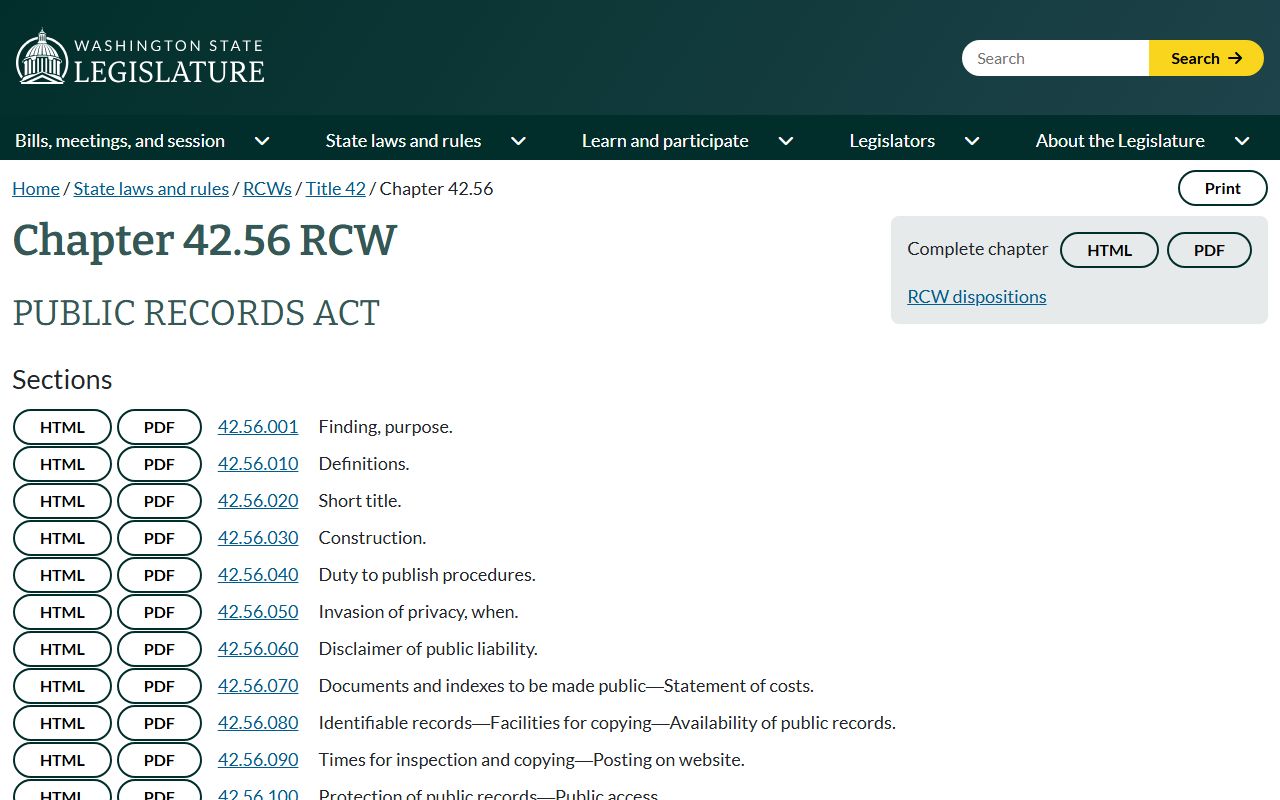
That statute drives how the county handles its administrative files, while case files keep moving through the clerk and the courts under GR 31.
The prompt-response duty for agency requests is set out in statute too. The text of RCW 42.56.520 spells out the response timeline.
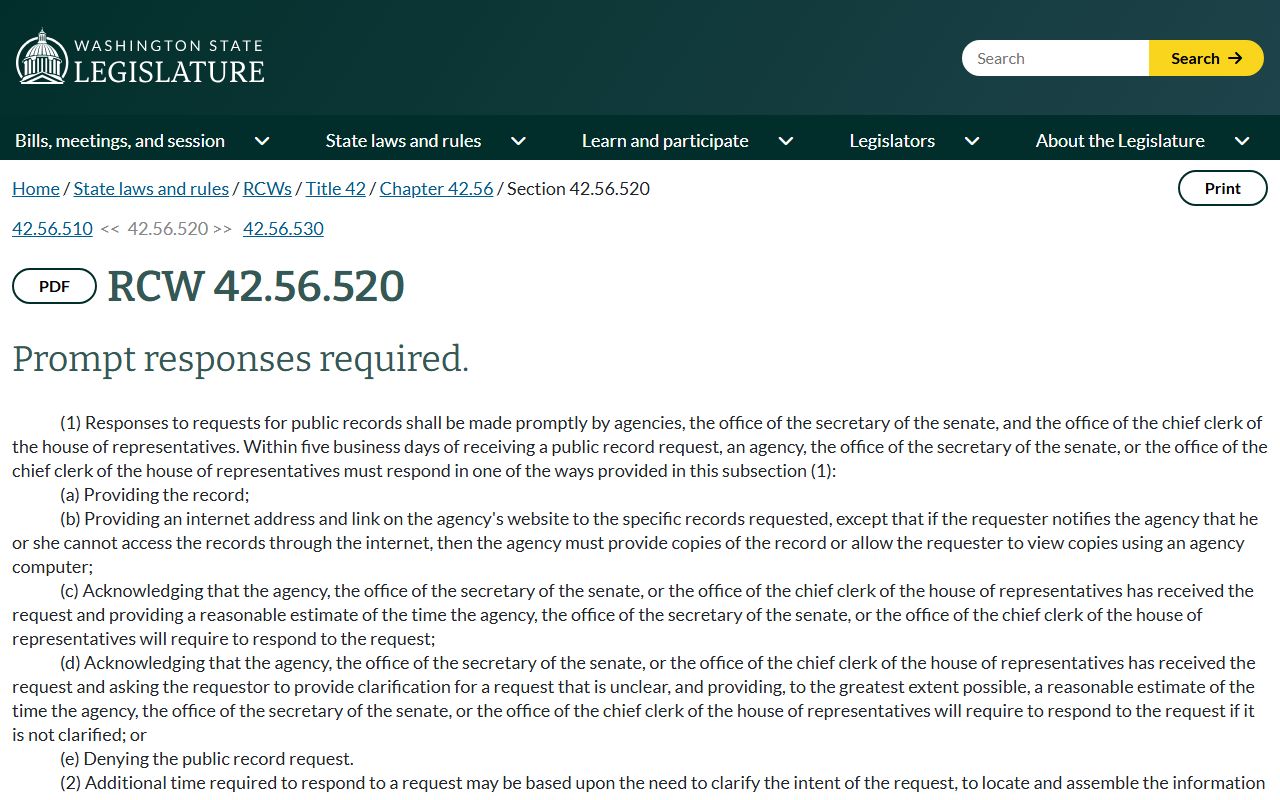
Note: District Court states it is not an agency under the Public Records Act, so its case records run under GR 31 and GR 31.1 rather than chapter 42.56 RCW.
Records That Are Sealed or Confidential in Snohomish County
Not every court record is open. Some are sealed by court order. Others are confidential by statute or by court rule. To reach these, a person usually needs a legal right or a court order, and the clerk often requires an in-person request with a government photo ID.
- Sealed or confidential Superior Court records, not public unless the law, a rule, or an order allows it.
- Juvenile records, controlled by RCW 13.50 and juvenile court rules.
- Adoption records, confidential under RCW 26.33.330.
- Mental health proceedings, often restricted by statute and court rule.
- Family law confidential information, restricted by GR 22.
- Jail records beyond the daily register, confidential under RCW 70.48.100 except to the inmate, by written permission, or by court order.
- Will repository records before death, sealed until the testator dies or appears with ID.
- Address Confidentiality Program marriage records, kept closed to public view.
Washington does not use one universal "expungement" path for adult court files. Adults often vacate convictions under RCW 9.94A.640 for qualifying felonies or RCW 9.96.060 for qualifying misdemeanors. A vacated conviction is not the same as deleting all history; the record may still show the vacation order unless sealed. Juvenile sealing falls under RCW 13.50.260. Common denial reasons include a disqualifying offense, too short a waiting period, pending charges, or filing in the wrong court.
If an agency denies a Public Records Act request, the statute provides a review path. See RCW 42.56.530 on agency denial review.
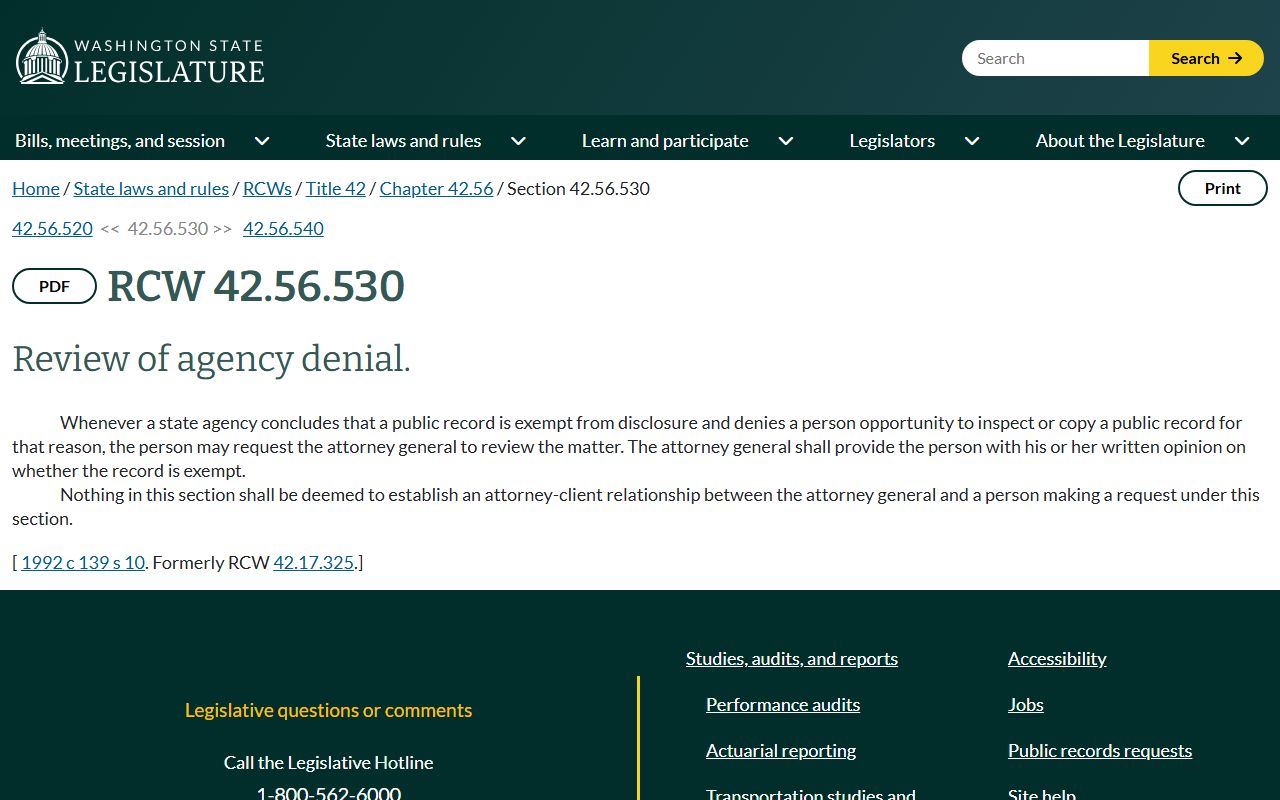
Keep in mind that court administrative record denials follow GR 31.1 review, not the Public Records Act path, so the route depends on the type of record.
Copy Fees and In-Person Requests for Snohomish County Court Records
Searching case information is free. Getting paper or certified copies is not. The Clerk of the Superior Court sets the copy and research fees and takes requests by mail or in person. Allow about 10 business days after the clerk receives full payment. Personal checks are not accepted; bring cash, a card with photo ID, a cashier's check, or a money order.
| Item | Fee |
|---|---|
| Regular copies | $0.25 per page |
| Court hearing audio | $25 per hearing date |
| Flash drive copies | $20 per drive plus $0.25/page plus $2.50 mailing per drive |
| Historical or exceptional research | $30 per hour, one-hour minimum |
The copy-charge authority for county agency records comes from statute. The text of RCW 42.56.120 sets out the copy-fee rules.
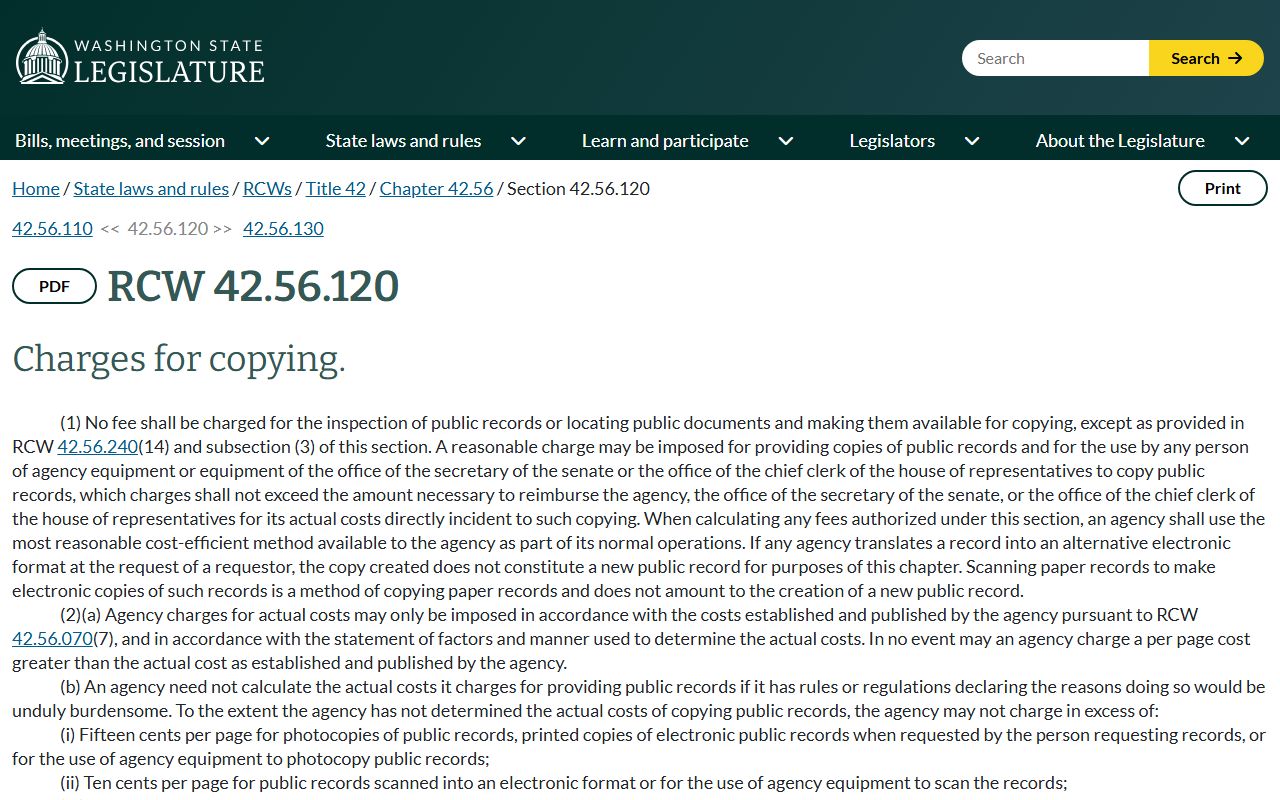
Court-record copy fees are set under separate clerk fee rules, but the layout of the statute helps explain how copy charges are framed in Washington. To make a mail request, send a completed copy request form, a stamped self-addressed envelope, and a cashier's check or money order payable to the Snohomish County Clerk, with a daytime phone or email.
Snohomish County Clerk, Superior Court
3000 Rockefeller Ave., M/S 605, Room M206
Everett, WA 98201
425-388-3466
Mon-Fri 8:30 a.m. to 4:30 p.m.
Note: the clerk closes for lunch from noon to 12:45 p.m., so plan an in-person visit around that gap.
Federal Court Records for Snohomish County
Some cases never reach a county court. Federal crimes, civil rights claims, immigration litigation, and federal-question civil cases go to federal court. Snohomish County sits in the U.S. District Court for the Western District of Washington, which covers the area west of the Cascades from Oregon to the Canadian border, with court locations in Bellingham, Seattle, and Tacoma.
You can learn the court's structure and divisions at the U.S. District Court for the Western District of Washington. The district handles the heavier federal civil and criminal docket.
County court records are separate from federal cases, so a Snohomish County search will not show a federal docket.
Bankruptcy is its own court. Filings, schedules, and discharge orders run through the U.S. Bankruptcy Court for the Western District of Washington. Debtors and creditors both end up in that record system.
Bankruptcy dockets, like other federal records, are accessed online rather than at a county clerk window.
Federal dockets and documents are pulled from PACER, the federal electronic records service. PACER needs a registered account and charges per page subject to current fee rules and quarterly waiver thresholds.
Public users can search the PACER Case Locator or a district-specific PACER site to find a case before pulling documents.
Federal prosecutions in the area are brought by the U.S. Attorney's Office for the Western District of Washington, based in Seattle. The office posts press releases and case outcomes for major federal matters.
The U.S. Attorney handles charging and prosecution, while the actual docket still lives in PACER.
For free access to some federal docket materials, try CourtListener, which hosts records already pulled into its RECAP archive. It will not have every filing, but it can save on PACER fees.
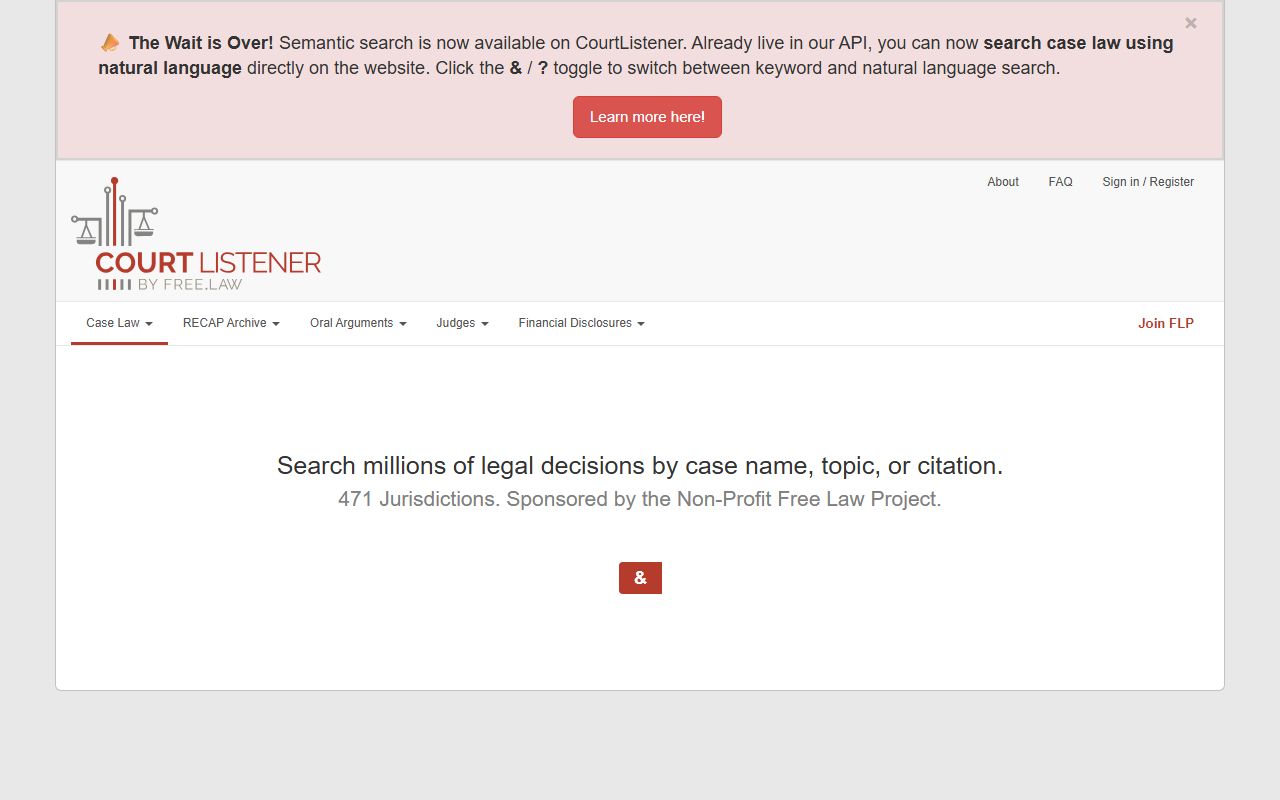
CourtListener is a good first stop before paying for documents through the official federal system.