
How to Search for Snohomish County Warrants
Snohomish County District Court publishes an Outstanding Warrants page instead of a fully indexed public search form. The page gives contacts, disclaimers, and steps to clear a warrant. You will not find a wide-open text box that returns every active warrant in the county. So the fastest route is often a phone call to the court that holds the case.
The contact depends on the charge level. For misdemeanor warrants, call District Court at 425-388-3331. For felony warrants, call the Snohomish County Clerk's Office at 425-388-3466. These two offices track different sets of cases, and a warrant may sit with only one of them. If you are not sure of the charge level, start with the court you last had a hearing in.
Charge level decides where a warrant lives. The county explains both contacts on its warrant FAQ page, which is a good first stop. Read the FAQ before you call so you can ask the right office.
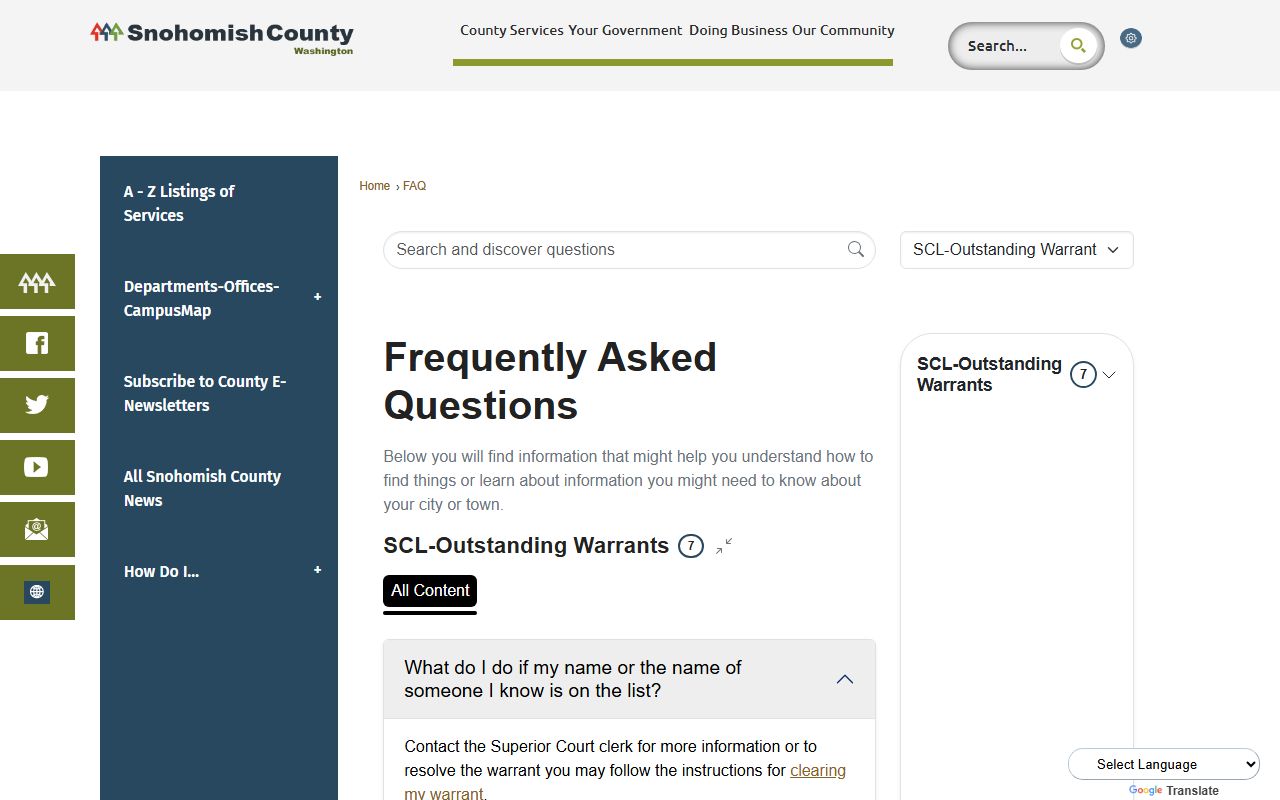
The FAQ answers common questions about felony and misdemeanor warrant lists and tells you what to do when a warrant does not appear where you expect.
Felony vs Misdemeanor Warrants in Snohomish County
The split between felony and misdemeanor warrants in Snohomish County is the main thing to understand. Felony cases run through the Superior Court and its Clerk. Misdemeanor and gross misdemeanor cases run through the District Court. The two systems keep separate records, so the warrant you want may only show in one place. The table below shows who to call and which court handles each type.
| Warrant Type | Court | Who to Call | Phone |
|---|---|---|---|
| Felony warrant | Superior Court | Snohomish County Clerk's Office | 425-388-3466 |
| Misdemeanor warrant | District Court | District Court | 425-388-3331 |
| Anonymous tip | Sheriff's Office | Tip line | 425-388-3845 |
If you have a warrant tip about another person, the Sheriff's Office runs an anonymous tips website and hotline at 425-388-3845. You do not have to give your name. Tips help law enforcement act on outstanding warrants, but they are not a way to look up your own case.
Some people check both lists. A warrant missing from the Superior Court list may be a District Court warrant, and the reverse can happen too. When in doubt, call one office, then the other.
Types of Warrants in Snohomish County
Courts and judges issue several kinds of warrants, and each one starts for a different reason. Knowing the type helps you figure out the next step. Most people deal with arrest warrants or bench warrants, but a few other kinds exist. Here are the common types tracked in Snohomish County.
- Arrest warrants. A judge signs these so police can take a named person into custody, usually tied to a charge.
- Bench warrants. The court issues these when someone fails to appear or breaks a court rule. Missing a hearing is the most common cause.
- Search warrants. These let police search a place or item for evidence. They do not order an arrest by themselves.
- Fugitive and extradition warrants. These cover people wanted in another state who are found locally.
- Probation, nonpayment, and contempt warrants. These come from breaking probation terms, skipping required payments, or ignoring a court order.
Not every warrant is open to the public. Sealed warrants and juvenile warrants may not appear on any public list. That keeps some cases off the records that most people can see.
What a Snohomish County Warrant Record Shows
People want to know what details a warrant listing holds. The honest answer is that the public view is limited. There is no full warrant inquiry form with a long set of columns visible to everyone. The FAQ gives the clearest picture of what a listing may include.
- What does the Superior Court outstanding warrant list show?
- The FAQ says the Superior Court warrant inquiry may list the first five charges or violations for each case or cause number. Some cases carry more than five charges, so the list may not show every count.
- What if my warrant is not on the Superior Court list?
- If a known warrant does not appear on the Superior Court list, it may be a District Court warrant. Check the misdemeanor outstanding warrant list, or contact your attorney or the Office of Public Defense.
- Is the listing the full court file?
- No. A warrant entry is a short summary. The full case file lives with the court, and you may need to request it in person or by other means.
Treat any warrant listing as a starting point, not the whole story. Charge counts, dates, and case status can shift, so confirm details with the court before you rely on them.
How to Clear a Snohomish County Warrant
Clearing a warrant takes the right steps in the right order. Acting fast usually helps your case more than waiting. The path depends on your bail amount and whether you posted bond before the warrant. Here are the steps, built from the county's own instructions.
- Contact the attorney who represented you and say you have a warrant to resolve.
- If you may qualify for public defense, contact the Office of Public Defense at 425-388-3500 for help resolving the warrant.
- Turn yourself in to local law enforcement.
- If bail is $5,000 or above, appear at any District Court division to get a court date to quash the bench warrant. The warrant stays outstanding until you appear on that court date.
- If bail is below $5,000, appear at any District Court division to ask for a new hearing date, as long as the bond or bail has not been forfeited.
- If bond was posted before the warrant was issued, appear at any District Court division and get a court date to quash, no matter the bail amount.
- Bring valid proof of identity.
- Note that Administrative Order 24-03 requires a physical appearance after an administrative bench warrant quash.
Any District Court division can take these requests. The county runs divisions in Everett, Lynnwood, Arlington, and Monroe. Pick the one that works for you, and bring your ID.
Official Warrant Data Disclaimer
Snohomish County does not promise that warrant data is accurate, current, complete, or fit for any purpose. The county disclaims those warranties, and users take on the responsibility for how they use the data. The county also asks users to agree to hold it harmless from damage, loss, or liability that comes from use of the information.
That matters in real terms. Warrant lists can lag behind what the court actually holds. A name may stay on a list after a warrant clears, or a fresh warrant may not show yet. Never act on a warrant listing alone. Confirm the current status with the court or law enforcement before you make a decision based on it.
Note: Verify any warrant status with the court or law enforcement before acting, since public lists may be delayed or incomplete.
Warrant and Payment Scam Warnings
Scams that use fake warrants are a real problem locally. District Court has warned residents about phone and text scams that claim a warrant, a missed jury date, or an unpaid balance. Scammers often sound official and push for fast payment. Knowing how the courts really work helps you spot the fraud.
Watch for these red flags. Courts and government offices do not use automated calls or texts to demand payment for warrants, balances, or license suspensions. They will never ask for payment or financial information over the phone. The Sheriff's Office never asks for money to help an inmate, and scammers are known to mine jail registry data to demand fake bail or payment. If a caller pressures you to pay by gift card, wire, or app, hang up and call the court directly using a number you trust.
When in doubt, stop and verify. Call District Court at 425-388-3331 or the Clerk's Office at 425-388-3466 from the number you looked up yourself, not the one a caller gives you. Real court staff will not punish you for checking.
Juvenile and Sealed Snohomish County Warrants
Juvenile warrants and sealed warrants get more protection than adult cases. Records tied to youth are restricted by law, so they may not show on any public warrant list. The state sets the rules for how these records are kept and accessed.
Juvenile court records are controlled under RCW 13.50.050, which limits who can see them and how. Sealing of juvenile records falls under RCW 13.50.260, which can close juvenile court files from public view once a court grants the request.
Below is the state statute page that governs juvenile records access in Washington.
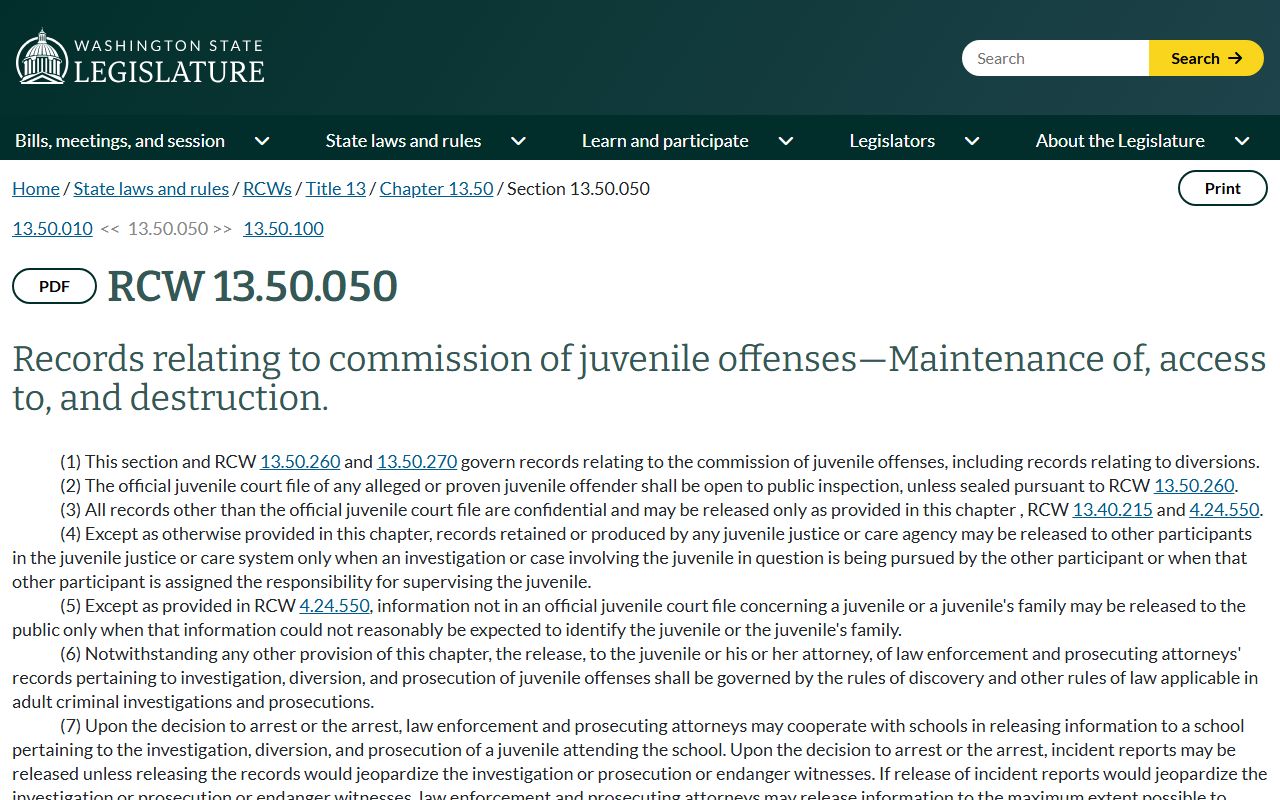
Reading the statute helps explain why a juvenile warrant may not appear on a public list. The sealing rule sits on a separate page, shown next.
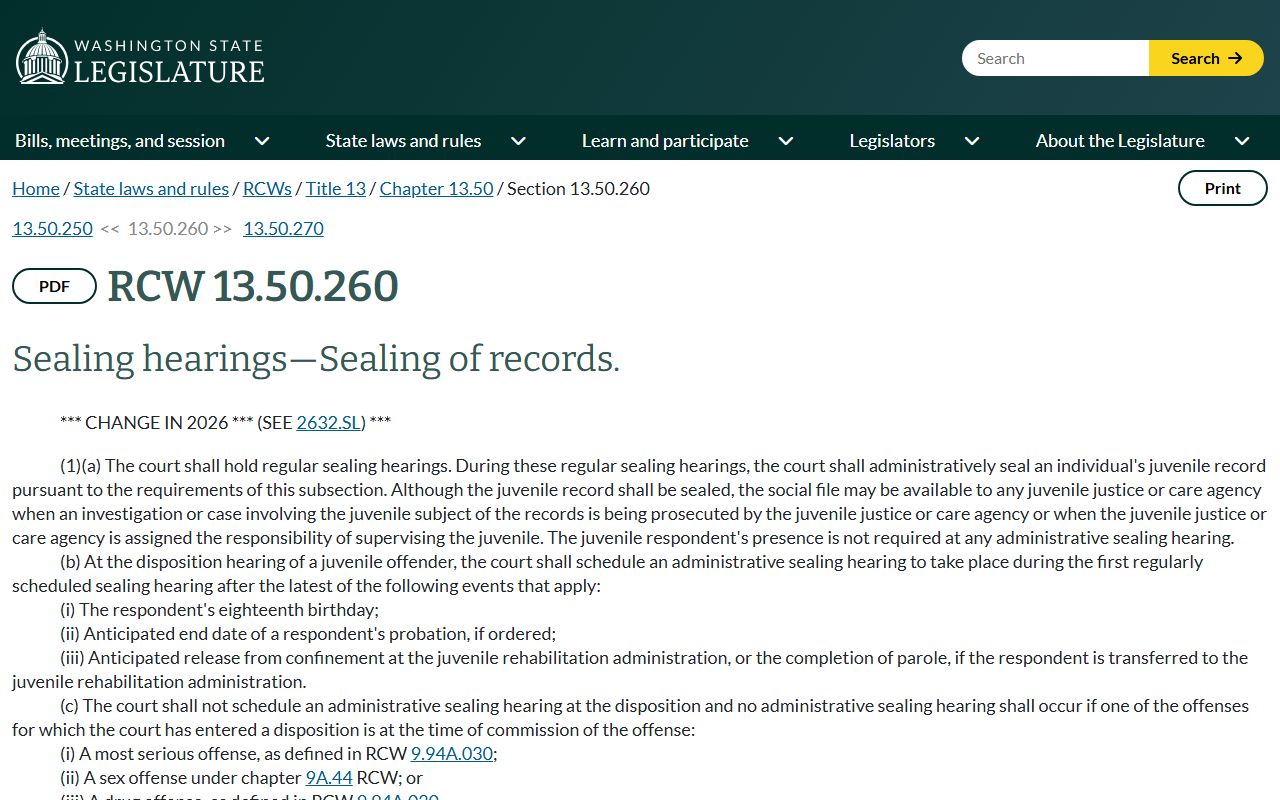
If a juvenile case has been sealed, the related warrant and file may be closed to the public, and access usually needs a legal right or a court order.