
How to Find Snohomish County Arrest Records
The fastest way to find a recent arrest is the public jail register run by SNO911. This tool, called the NWS Jail Register, lists people booked into the Snohomish County Jail and the city jails in Lynnwood and Marysville. It is the main place to check booking data for the county. You can search by name, by booking number, or by date range. The register updates often, so a new arrest can show up within hours of booking.
Searches are free and need no account. Use the tips below to get clean results. If you only know part of a name, try the last name alone or a last name with a first initial. The system uses a "LastName, FirstName" format in the name box. You can also narrow a search by the agency that made the arrest or by the day the person was booked.
- Open the NWS Jail Register for Snohomish County.
- Type the person's name in "LastName, FirstName" form, or use the last name only.
- To narrow results, add a Booking From Date and Booking To Date range.
- Pick an Arresting Agency from the dropdown if you know who made the arrest.
- Check the In Custody box to limit results to people held right now.
- Run the search, then click a name to open the full booking detail.
Each result row shows the name, subject number, custody status, multiple bookings flag, and housing facility. Click into a record to see charges, bond, and court dates. Lynnwood and Marysville hold their own inmates, so questions about people in those city jails should go to the city facility. The county jail sits at 3025 Oakes Ave. in Everett, phone 425-388-3395.
Note: The jail register also shows past bookings and release dates, so a name can appear even after the person has left custody.
What Snohomish County Arrest Records Show
An arrest record in the jail register packs a lot into one screen. The booking detail page starts with the person's name and a subject number, then lists each booking. For every booking you can see the charges, the dates tied to the offense, and the agency that made the arrest. Bond and bail amounts show up too. This data comes straight from the jail's intake system, so it reflects the arrest, not the final court outcome.
The charge table is the richest part. It breaks down each charge with its description, count, offense date, and crime class. Crime classes you may see include misdemeanor, gross misdemeanor, and felony classes B and C. The table can also list a docket number, a disposition, and a sentence date once those are entered. Bond data appears in its own table with bond number, type, amount, and status.
| Field | What It Shows |
|---|---|
| Booking Number | Unique ID for the booking, in a format like 2026-00001455. |
| Booking Date | The date and time the person was booked into jail. |
| Subject Number | A 7-digit number tied to the person for deposits and mail. |
| Charge Description | The offense the person was booked on, with count and crime class. |
| Offense Date | The date the alleged offense took place. |
| Arresting Agency | The police or sheriff agency that made the arrest. |
| Total Bond Amount | Bond and bail set for release, listed by bond type and status. |
| Court Date / Court | Scheduled hearing, court, and courtroom, such as Everett District Court. |
Arresting agencies in the dropdown run a wide range. They include the Snohomish County Sheriff's Office, Everett PD, Lynnwood PD, Marysville PD, Edmonds PD, Lake Stevens PD, the Washington State Patrol, and regional task forces. The case tracking agency field shows which court or office now handles the case. So you can tell a sheriff's arrest from a city arrest at a glance.
Arrest Record vs Criminal Court Record
People often mix up an arrest record and a court record. They are not the same thing. An arrest record is the booking made by the sheriff or a police agency. A court record is the case file kept by the court and the clerk after charges are filed. One starts the process; the other tracks it through the system. Both can exist for the same person and the same incident.
The jail register is the place for the arrest side. For the full case history, including filings, hearings, pleas, and the final judgment, you need court records. Those live with the Superior Court and District Court and are searched through the clerk's tools.
| Arrest / Booking Record | Criminal Court Record |
|---|---|
| Created by the sheriff or arresting police agency | Created by the court and clerk after a case is filed |
| Found in the NWS Jail Register | Found through court case search and the clerk's office |
| Shows booking, charges, bond, custody status | Shows filings, motions, orders, judgment, and sentence |
| Reflects the moment of arrest | Reflects the whole life of the case |
For the full case file and docket, see the Snohomish County court records page. An arrest does not always lead to a filed case. Prosecutors review the arrest and decide whether to charge.
Charges vs Convictions
This is the most important point to grasp when you read arrest records. A charge is not a conviction. A charge is an accusation. It means a person was arrested or formally accused of an offense. A conviction is a finding of guilt, either by a plea or by a verdict at trial. The jail register and arrest data show charges, not final outcomes, in most cases.
So a booking that lists three charges does not mean the person was found guilty of all three, or any of them. Charges get dropped, reduced, or dismissed all the time. The disposition column in the charge table is where you may see the result once it is entered. Until then, treat the charges as allegations only.
| Charge | Conviction |
|---|---|
| An accusation that someone committed an offense | A finding of guilt by plea or by trial |
| Appears at or near the time of arrest | Appears after the case is resolved in court |
| Can be dropped, reduced, or dismissed | Becomes part of the person's criminal history |
| Listed in the jail register charge table | Shown by court disposition and judgment records |
Note: A person is presumed innocent until proven guilty, so arrest data alone should never be read as proof of a crime.
Mugshots and Public Jail Register Data
What the jail can release to the public is set by state law. Under RCW 70.48.100, the daily jail register may release a limited set of fields. These are the inmate name, booking dates, charge descriptions, offense dates, bail and bond information, and the arresting agency. Everything else in an inmate's record is confidential. Those private records go only to the inmate, to someone with the inmate's written permission, or by court order.
You can read the exact rule on the RCW 70.48.100 page. The statute draws a clear line between the daily register and all other jail files.
That privacy split matters when people look for mugshots. The booking detail pages in the jail register do not show a mugshot or photo in the public text. Demographic details like date of birth, height, weight, race, and sex are also not shown in the public record. So the register reads more like a text roster than a photo gallery.
Be careful with arrest data and scams. The Sheriff's Office warns that scammers use the inmate registry to find people in custody, then call family or friends and demand money for bail, home monitoring, or treatment. The Sheriff's Office says it will never call asking for money on behalf of an inmate. It does not accept Zelle, Venmo, or PayPal, and it does not ask for payment at offsite check-cashing spots. If you get a call like that, hang up and verify through the jail directly.
Criminal Court Records and Criminal History
Once charges are filed, the case moves to court, and that is where criminal court records build up. Superior Court handles felony cases in Snohomish County. District Court handles misdemeanors and gross misdemeanors, including criminal traffic matters. These records can include the charging information, plea documents, the judgment and sentence, and any no-contact orders or warrants tied to the case.
One key point: the county does not provide official criminal history reports. Washington Courts states that the Washington State Patrol keeps the official criminal history record through its WATCH system. So a single jail booking or one court case is not the same as a full statewide rap sheet. For that, WSP WATCH is the source.
Criminal history record information is governed by state law under chapter 10.97 RCW. You can review the framework on the RCW 10.97 page, which sets the rules for how criminal history is shared and used.
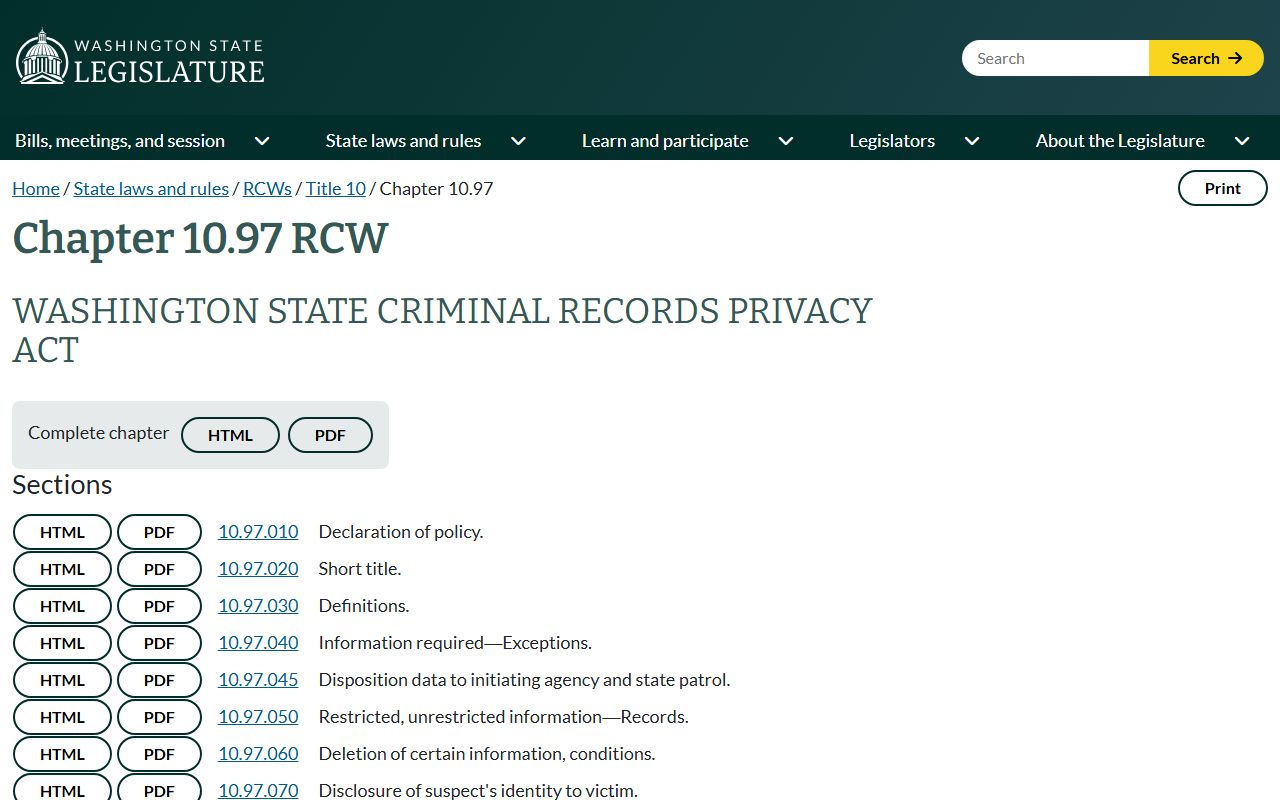
That statute reminds users that arrest data and court filings are not the official criminal history. For the docket, filings, and judgment side of a criminal case, use the county court records tools. To check active warrants tied to an arrest, see the warrant records page.
The Prosecutor and Public Defender
After an arrest, two offices play a big role in what happens next. The Snohomish County Prosecuting Attorney decides whether to file charges and then prosecutes the case. The Office of Public Defense arranges a lawyer for people who cannot afford one. Together they shape much of the criminal court record that follows an arrest.
The Prosecuting Attorney is Jason Cummings. The office prosecutes all adult and juvenile felony cases referred by county law enforcement, plus many misdemeanor cases referred by the sheriff, the State Patrol, and some contracting cities. You can learn more on the Prosecuting Attorney page.
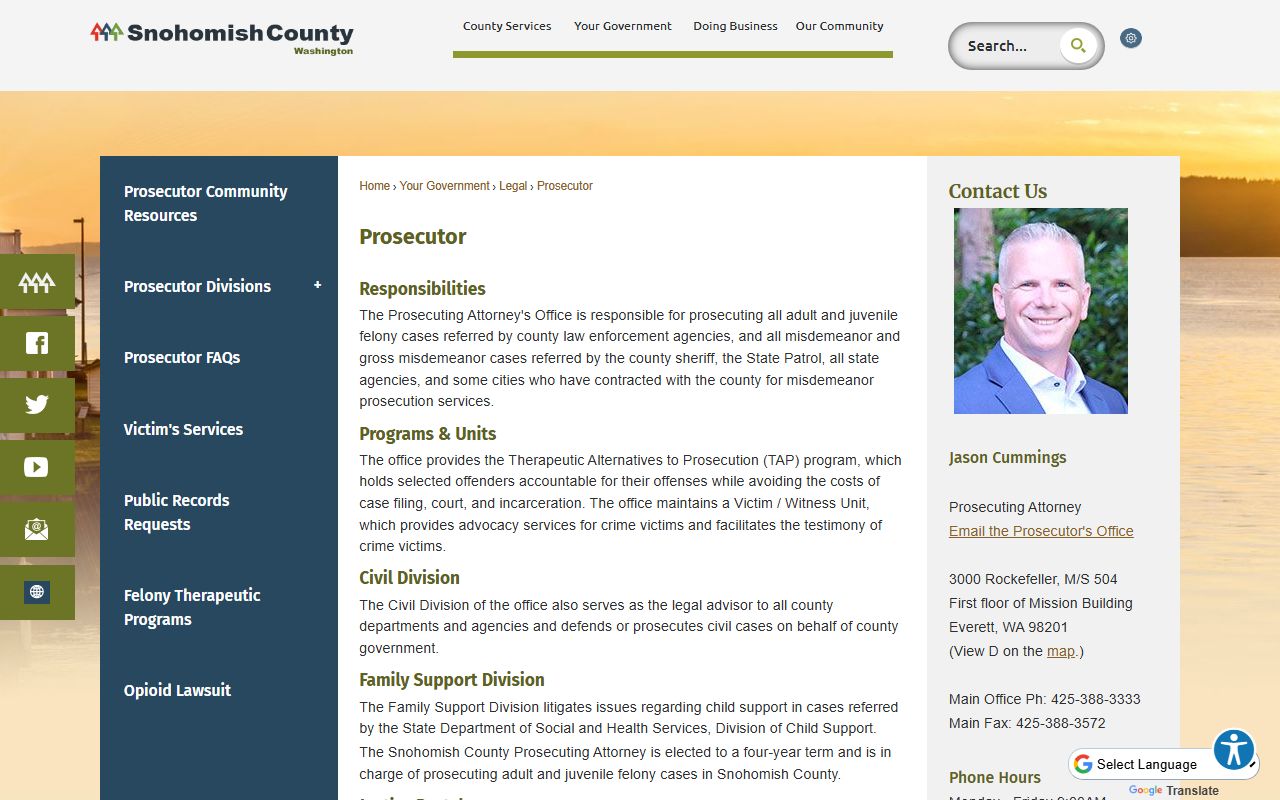
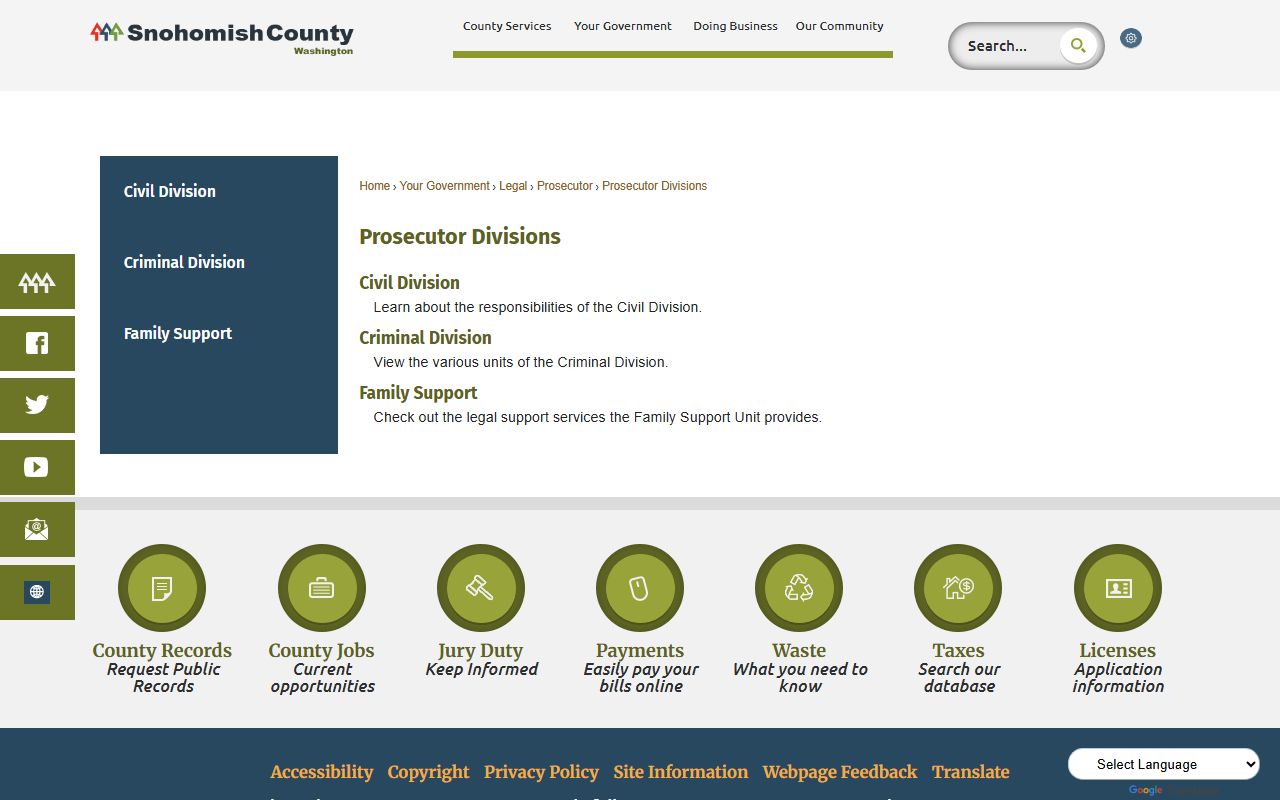
The office runs three main divisions. The Prosecutor Divisions page lists the Civil Division, the Criminal Division, and Family Support. A Victim/Witness Unit helps victims and witnesses through the court process.
On the defense side, the Office of Public Defense handles assigned counsel for indigent people in criminal and civil cases where jail or loss of liberty is possible. It screens for indigency and can do those screenings in the office, at the county jail, or by phone. For warrant resolution help, the OPD phone is 425-388-3500.
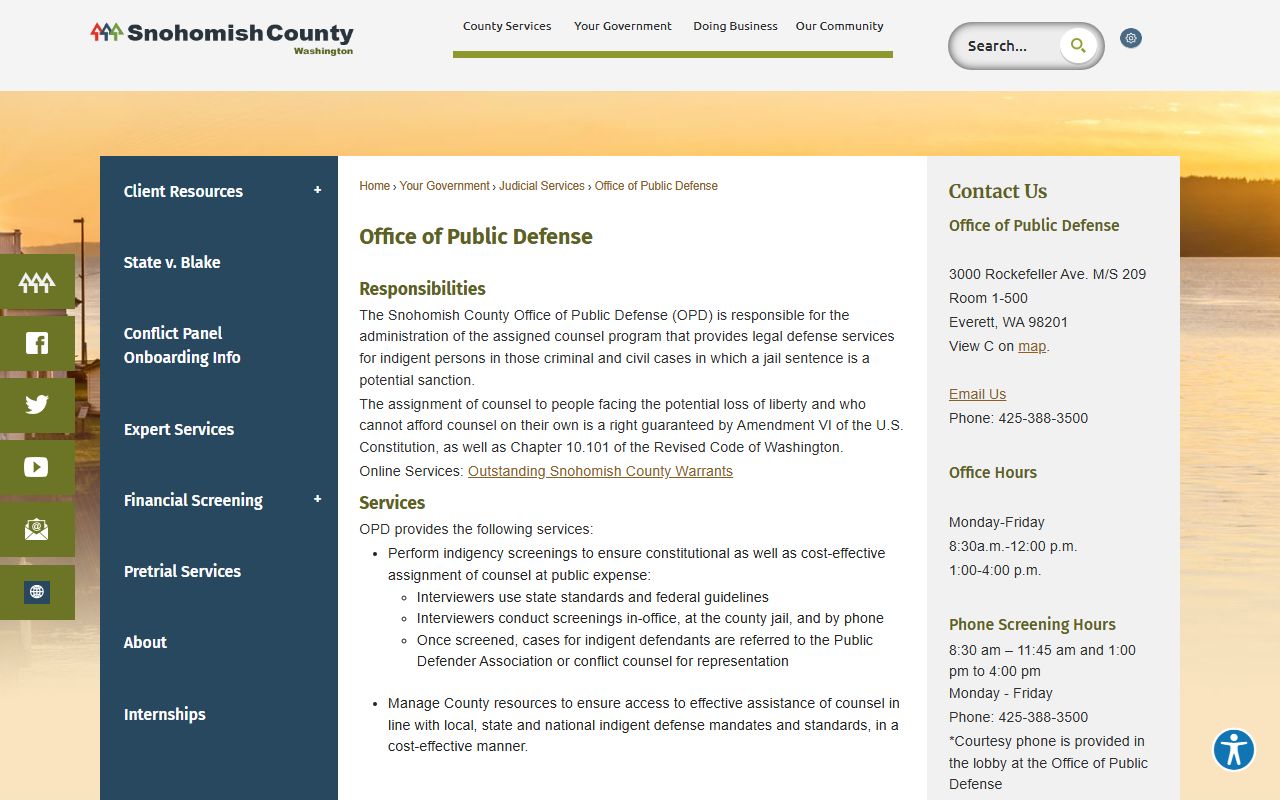
Note: A public defender is appointed only after a person is screened and found to qualify under state indigency standards.
Sealed vs Vacated Records
Many people want to clear an old arrest or conviction from view. Washington does not use one blanket "expungement" for adult court records the way some states do. Instead, adults often use conviction vacation. A vacated conviction is set aside under statutory rules. Sealing limits public access to a record. The two are not the same, and a vacated conviction does not delete all history. Court records may still show the vacation order unless the file is separately sealed.
| Sealed Record | Vacated Conviction |
|---|---|
| Court order limits public access to the file | Court sets aside the conviction under statute |
| The record still exists but is hidden from view | The person may state they were not convicted, with limits |
| Often tied to juvenile files and sensitive matters | Uses felony or misdemeanor vacation statutes |
| Access needs legal right or a court order | The vacation order itself may still show in the file |
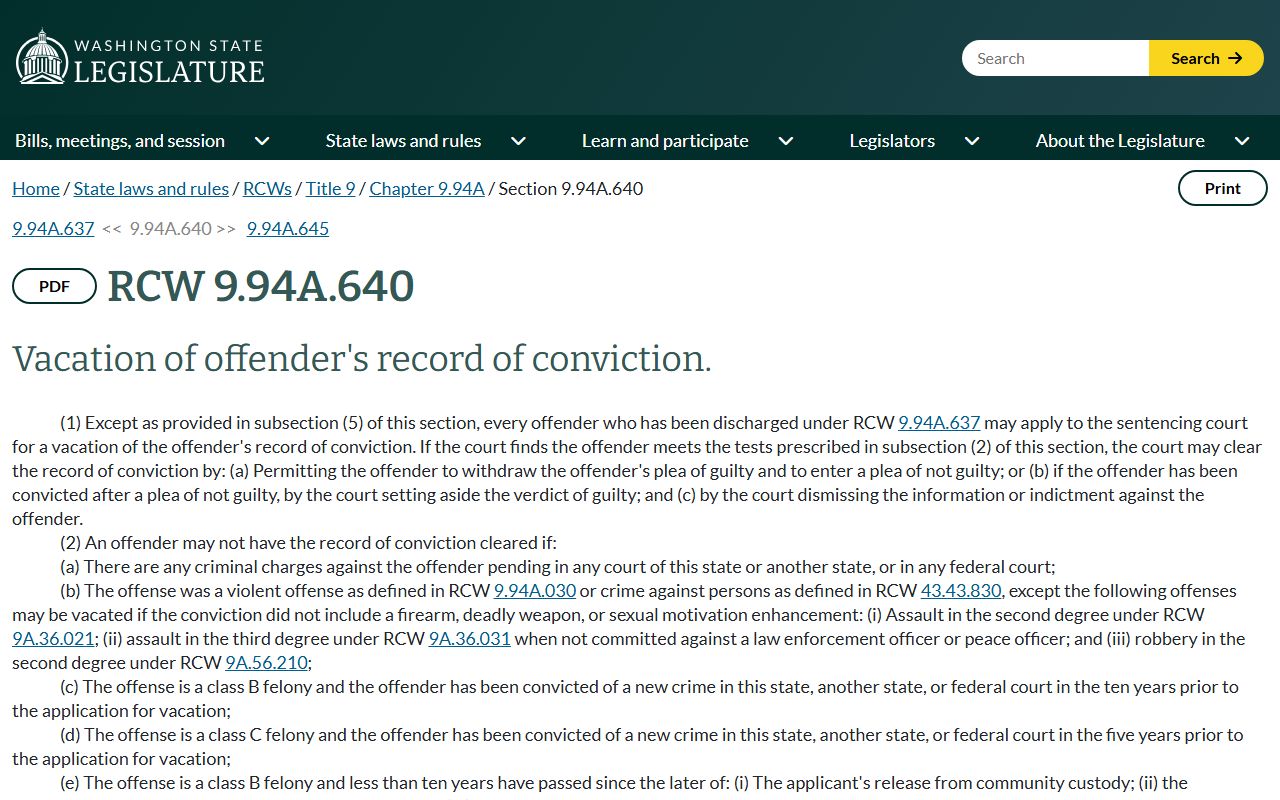
Felony vacation runs under RCW 9.94A.640, which lets some felony convictions be vacated if the criteria are met. You can read it on the RCW 9.94A.640 page.
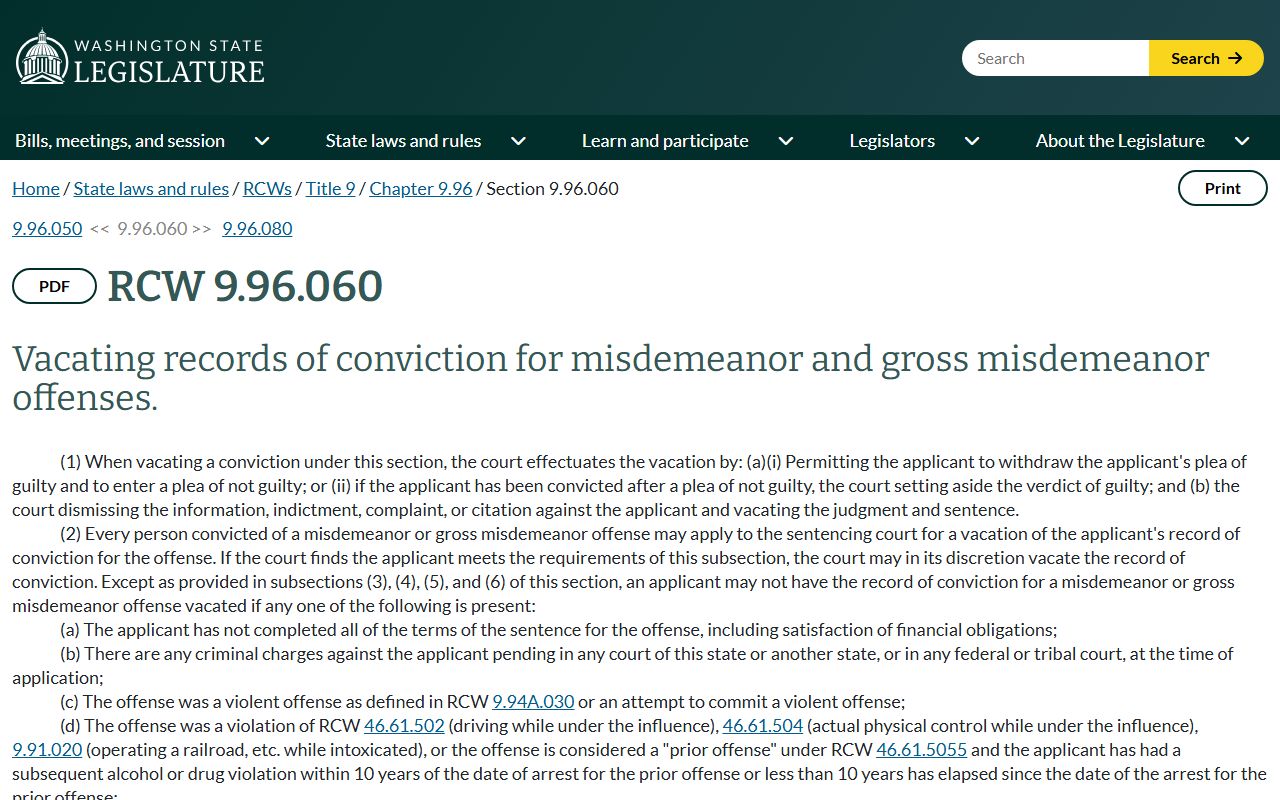
Misdemeanor and gross misdemeanor vacation runs under RCW 9.96.060. It allows qualifying convictions to be vacated after set waiting periods. The full text is on the RCW 9.96.060 page.
The State v. Blake decision from 2021 added a special path. District Court notes that people convicted of certain drug-related misdemeanor or gross misdemeanor offenses may seek conviction vacation and refunds of legal financial obligations. Petitioners usually file in the court of conviction, serve the prosecutor, show they qualify, and get a signed order.